CS vs IT: Which Degree Is Better for Your Career?
Choosing between Computer Science (CS) and Information Technology (IT) can be challenging, especially if you are interested in technology but are unsure which direction to take. Both fields offer opportunities in the technology industry, but they focus on different aspects of computing.
So, who is better, CS or IT? Neither is universally better. Computer Science is generally more focused on programming, software development, algorithms and the theoretical foundations of computing. Information Technology focuses more on using, managing, maintaining and securing computer systems, networks and technology infrastructure.
The better option depends on your interests, strengths and career ambitions. If you enjoy developing software and understanding how computer systems work, Computer Science may be a better fit. If you prefer managing networks, supporting users, maintaining systems and solving practical technology problems, Information Technology may suit you more.
This guide explains the differences between CS and IT, compares their career opportunities and helps you decide which degree is worth pursuing.
What Is Computer Science (CS)?
Computer Science is the study of computers, computational systems and the principles behind software and technology. It explores how computers process information, how software is developed and how complex problems can be solved through programming and algorithms.
A Computer Science degree usually combines theoretical knowledge with practical programming experience. Students learn how to design software, develop applications, analyse data and understand the architecture of computing systems.
Common subjects in a Computer Science programme include:
- Programming languages such as Python, Java and C++.
- Data structures and algorithms.
- Software engineering.
- Computer architecture.
- Operating systems.
- Database management.
- Artificial intelligence and machine learning.
- Cybersecurity fundamentals.
- Mathematics and computational theory.
Computer Science is particularly suitable for people who enjoy logical thinking, problem-solving, mathematics and creating technology.
What Is Information Technology (IT)?
Information Technology focuses on how organisations use computer systems, networks, software and digital infrastructure to operate effectively.
Rather than concentrating mainly on how software and computing technologies are developed, IT is concerned with implementing, managing, securing and maintaining technology that people and businesses rely on.
An IT degree generally combines technical knowledge with practical training in computer systems and organisational technology.
Common subjects in an Information Technology programme include:
- Computer networking.
- Systems administration.
- Database management.
- Cybersecurity.
- Cloud computing.
- IT infrastructure.
- Technical support and troubleshooting.
- Information systems management.
- IT project management.
Information Technology is a good choice for people who enjoy working with technology in practical environments, maintaining systems and helping organisations solve technical problems.
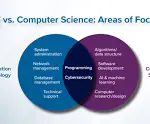
Computer Science vs Information Technology: What Is the Difference?
Although Computer Science and Information Technology overlap, their main areas of focus are different.
Computer Science concentrates more on computing principles, programming, algorithms and the development of software. Information Technology focuses more on applying and managing technology to support businesses, organisations and individual users.
Here is a simple comparison:
| Area | Computer Science (CS) | Information Technology (IT) |
|---|---|---|
| Main focus | Computing theory and software development | Technology systems and infrastructure |
| Programming | Usually a major component | Varies by programme |
| Mathematics | Often more mathematics-intensive | Usually less theoretical mathematics |
| Networking | May cover networking principles | Often a major area of study |
| Software development | Strong emphasis | May include application development |
| Cybersecurity | Covers security principles and computing concepts | Often focuses on practical security and system protection |
| Hardware | Studies computer architecture and systems | Often involves maintaining and managing equipment |
| Typical work | Building and improving software and computing systems | Managing, securing and supporting technology systems |
The distinction is not absolute. Some IT programmes include substantial programming, while some Computer Science programmes offer specialisations in networking, cybersecurity and systems administration.
Always review the actual course modules before choosing a programme.
Who Is Better, CS or IT for Career Opportunities?
Both degrees can lead to rewarding careers. However, they may prepare graduates for different roles within the technology industry.
Career Opportunities with a Computer Science Degree
Computer Science graduates often pursue careers involving software development, programming, data analysis and advanced computing.
Some common career paths include:
1. Software Developer
Software developers design, build, test and maintain computer applications. They may work on mobile applications, websites, business software or large-scale digital platforms.
2. Software Engineer
Software engineers apply engineering principles to the development of reliable and scalable software systems. Their work can involve designing applications, testing systems and improving software performance.
3. Data Scientist
Data scientists analyse large datasets to identify patterns, generate insights and support decision-making. The role often requires programming, statistics and knowledge of data analysis tools.
4. Artificial Intelligence Engineer
AI engineers develop and implement systems that use machine learning and artificial intelligence. This area combines programming, mathematics, data science and computer science principles.
5. Systems Analyst
Systems analysts examine how organisations use technology and recommend improvements to computer systems and business processes.
6. Cybersecurity Specialist
Computer Science graduates may also move into cybersecurity roles, particularly those involving secure software development, application security and technical security analysis.
Career Opportunities with an Information Technology Degree
An Information Technology degree can prepare graduates for careers involving the management, maintenance and protection of computer systems.
Common career options include:
1. IT Support Specialist
IT support specialists help individuals and organisations resolve technical problems involving computers, software, networks and other technology.
2. Network Administrator
Network administrators manage an organisation’s computer networks, ensuring that systems remain connected, secure and reliable.
3. Systems Administrator
Systems administrators maintain servers, operating systems, user accounts and other essential technology infrastructure.
4. Cybersecurity Analyst
Cybersecurity analysts monitor systems, identify security risks and help protect organisations against cyberattacks and unauthorised access.
5. Cloud Administrator
Cloud administrators help manage cloud-based infrastructure, services and applications. Their work may involve platforms such as Microsoft Azure and Amazon Web Services.
6. IT Project Manager
IT project managers coordinate technology projects, manage resources and work with technical teams to deliver projects within agreed timelines and budgets.
These career paths are examples rather than guaranteed outcomes. Employers may require additional qualifications, certifications, practical experience or specialist skills.
Is Computer Science Harder Than Information Technology?
Computer Science is often considered more academically demanding in mathematics, programming and theoretical problem-solving.
Students may need to understand complex algorithms, computational theory, programming structures and mathematical concepts.
Information Technology can be less theoretical in some programmes, but that does not mean it is easy. IT students must understand computer networks, operating systems, cybersecurity, databases and technical infrastructure.
The difficulty of either subject depends on the university, course structure and the student’s strengths.
For example:
- If you enjoy mathematics, logic and programming, Computer Science may feel more natural.
- If you prefer practical troubleshooting, networking and system management, Information Technology may be more comfortable.
- If you dislike programming, check the curriculum carefully because both subjects can include coding.
- If you enjoy learning how technology supports businesses, IT may be a suitable direction.
Neither degree should be chosen simply because it is considered easier.
Which Degree Pays More: CS or IT?
Computer Science graduates may have access to higher-paying opportunities in specialised areas such as software engineering, artificial intelligence, machine learning and advanced data science.
However, Information Technology professionals can also earn competitive salaries, particularly as they develop expertise in cybersecurity, cloud infrastructure, network engineering and IT management.
Actual earnings depend on several factors:
- Country and location.
- Employer and industry.
- Professional experience.
- Technical specialisation.
- Professional certifications.
- Level of responsibility.
- Demand for particular skills.
For example, an experienced cloud architect or cybersecurity professional may earn more than a graduate software developer. Similarly, a highly skilled software engineer may earn more than someone working in entry-level IT support.
It is therefore misleading to assume that every Computer Science graduate earns more than every IT graduate.
If salary is a major consideration, research the job market in the country where you intend to work and compare salaries for specific occupations rather than degree titles alone.
Can You Become a Software Developer with an IT Degree?
Yes. An Information Technology degree does not automatically prevent you from becoming a software developer.
Although Computer Science programmes usually provide more extensive training in programming, algorithms and software development, some IT degrees include programming languages, application development and software engineering modules.
If you want to move into software development after studying IT, you may need to strengthen your skills through:
- Learning programming languages such as Python, JavaScript or Java.
- Building practical software projects.
- Understanding data structures and algorithms.
- Developing a portfolio of your work.
- Completing relevant software development training.
- Gaining practical experience through internships or entry-level roles.
Employers generally assess a combination of education, technical ability, experience and problem-solving skills.
Can You Work in Cybersecurity with CS or IT?
Yes. Both Computer Science and Information Technology can provide a foundation for a career in cybersecurity.
Computer Science may be particularly useful for careers involving application security, secure software development, cryptography and security research.
Information Technology can provide a practical foundation for network security, security operations, infrastructure protection and systems administration.
Possible cybersecurity roles include:
- Cybersecurity analyst.
- Security operations centre (SOC) analyst.
- Network security engineer.
- Penetration tester.
- Information security specialist.
- Security engineer.
Some positions require additional professional certifications, specialist training and hands-on experience.
CS or IT: Which Degree Is Better for the Future?
Both Computer Science and Information Technology are relevant to the future of the technology industry.
Businesses increasingly depend on software, cloud services, digital infrastructure, data systems and cybersecurity. This creates opportunities for professionals with skills in both fields.
Computer Science may be particularly attractive if you are interested in emerging areas such as:
- Artificial intelligence and machine learning.
- Software engineering.
- Robotics.
- Data science.
- Advanced computing.
- Application development.
Information Technology may be attractive if you are interested in:
- Cloud computing.
- Cybersecurity.
- Network infrastructure.
- IT service management.
- Systems administration.
- Enterprise technology management.
However, technology changes quickly. The value of either degree will depend partly on your ability to keep learning and adapt to new tools, systems and industry requirements.
Practical experience, technical certifications and professional development can strengthen your qualifications in either field.
How to Choose Between Computer Science and Information Technology
Before selecting a degree, consider what you enjoy doing and the type of work you would like to pursue.
Choose Computer Science if:
- You enjoy programming and developing software.
- You are interested in artificial intelligence and data science.
- You enjoy mathematics, logic and analytical problem-solving.
- You want to understand how computing systems work.
- You are interested in software engineering or application development.
Choose Information Technology if:
- You enjoy working with computer systems and networks.
- You like troubleshooting technical problems.
- You are interested in cybersecurity and cloud infrastructure.
- You want to manage and maintain business technology.
- You prefer applying technology to practical organisational needs.
If you are still undecided, compare the course modules offered by different universities. Two degrees with the same title can have significantly different subject combinations.
Also consider accreditation, entry requirements, teaching methods, practical training opportunities and the recognition of the qualification in the country where you plan to work.
Frequently Asked Questions About CS and IT
1. Is CS better than IT?
Computer Science is not automatically better than Information Technology. CS is generally more suitable for people interested in programming, software engineering and computing theory, while IT is often better suited to those interested in networks, systems administration and managing technology infrastructure.
2. Which is easier, Computer Science or IT?
Information Technology may involve less advanced mathematics and theoretical computing in some programmes. However, both subjects require technical knowledge and problem-solving. The easier option depends on your interests, abilities and the specific university curriculum.
3. Can an IT graduate become a software engineer?
Yes. IT graduates can become software engineers by developing programming skills, learning software engineering principles and gaining relevant practical experience. Some employers may also require a related degree or demonstrated technical competence.
4. Which has more job opportunities, CS or IT?
Both fields offer opportunities across different industries. Computer Science is associated with software development, data science and advanced computing, while IT supports networking, cybersecurity, cloud infrastructure and technology management. Opportunities depend on location, experience and employer demand.
5. Is Computer Science the same as Information Technology?
No. Computer Science studies the principles of computing, algorithms and software development. Information Technology focuses on implementing, managing and maintaining technology systems used by individuals and organisations. There is some overlap between the two disciplines.
6. Can I study IT without being good at mathematics?
Many Information Technology programmes require some mathematical knowledge, but the amount varies between institutions. IT courses may place greater emphasis on practical technical skills than advanced mathematical theory. Check the entry requirements and course modules before applying.
7. Which degree is better for artificial intelligence?
Computer Science is generally the more direct route into artificial intelligence because it often includes programming, algorithms, mathematics and machine learning. However, some IT programmes offer relevant AI, data analytics or intelligent systems modules.
8. Can I switch from IT to Computer Science?
In many cases, yes. However, transferring between programmes depends on the university’s admission and credit-transfer policies. You may need to complete additional modules, particularly in mathematics, programming and computer science fundamentals.
Explore Your Degree Options
Still deciding which academic path is right for you? Explore our Bachelor’s Degree Guide to learn about undergraduate study options, entry requirements, programme structures and how to choose a degree that supports your future career goals.
Final Verdict: Should You Choose CS or IT?
So, who is better, CS or IT? The answer depends on the kind of technology career you want to build.
Computer Science is a strong choice if you want to create software, develop applications, work with artificial intelligence or explore the technical foundations of computing.
Information Technology is a strong choice if you want to manage networks, protect computer systems, work with cloud infrastructure or help organisations use technology effectively.
Both degrees can lead to long-term career opportunities. Rather than choosing based only on which subject appears more popular or pays more, consider your interests, preferred learning style and the professional skills you want to develop.
Most importantly, choose a recognised programme with a curriculum that supports your career goals. A relevant degree, combined with practical experience and continuous learning, can provide a valuable foundation for a career in technology.
One thought on “CS vs IT: Which Degree Is Better for Your Career?”